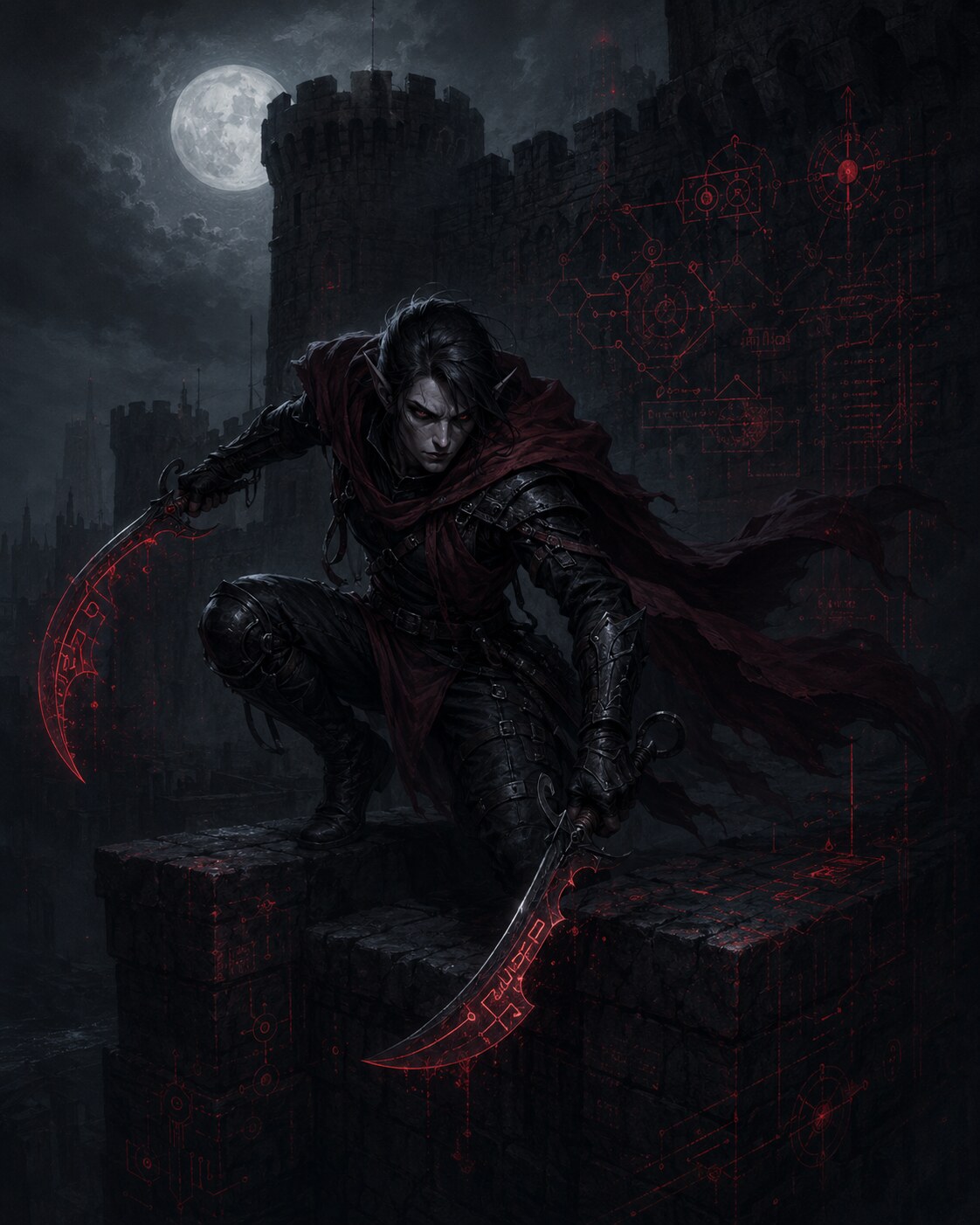
The Blood Red Reaver
Origin
Before the Trial Keeps existed, the Forge Lords built walls the old way. Higher. Thicker. Heavier. Stone answered every problem. When one keep survived a siege, the next keep was built taller. When a gate held, the next gate was reinforced. Heroes became proud of walls and forgot the purpose of walls. Then the Forge changed its law. No keep could be crowned complete until someone tried to break it. That law created the Red Trials. Heroes were invited to attack. Not to conquer. To reveal. Among those heroes stood a knight called Rowan Vey. He was brilliant. He climbed where others marched. He watched kitchens instead of towers. He learned routines instead of studying stone. He won trials nobody else could win. The Forge rewarded him. Gold. Titles. Keys. Soon no keep passed inspection unless Rowan tested it. At first, he delivered reports. Then recommendations. Then demands. Years passed. The knight stopped speaking like a tester. He spoke like an owner. One season, he entered a newly completed keep carrying trial authority and never returned. Three days later the gates opened. The defenders were unharmed. The stores remained full. Nothing had been stolen. Only one thing had changed. Every lock in the keep answered to Rowan. The Forge revoked his title. He returned the parchment. He kept the keys. From then on he became known as the Blood Red Reaver. Not because of slaughter. Because every banner he served eventually belonged to him.
Domain
The Blood Red Reaver roams the Trial Marches. The Marches are a land of unfinished keeps, broken walls, hanging bridges, rope ladders, dry moats, and abandoned siege camps. No fortress there is permanent. Every structure exists to be tested. Heroes travel the Marches seeking weaknesses in themselves and their companions. The Reaver walks those roads offering contracts. He always introduces himself the same way. "I am here to improve your defenses." Heroes who accept often discover too late that he already knows where every hidden door is.
Signs of Presence
The first sign is admiration. Heroes begin speaking more about walls than purpose. The second sign is convenience. Doors are left unlocked for trusted guests. Old exceptions remain because changing them feels unnecessary. Then comes the red mark. Not painted. Carved. A single line hidden somewhere impossible. Behind a hinge. Inside a lock. Beneath a stair. The Reaver has already been inside.
Powers
Keykeeper's Claim The Reaver turns temporary access into permanent authority. Broken Ladder He bypasses defended routes and enters where no one thought to watch. Trust Passage The more welcome he is, the stronger his position becomes. Open Gate Doctrine He convinces defenders to weaken themselves for convenience.
Weakness
The Blood Red Reaver cannot defeat heroes who understand that testing and ownership are not the same thing. He weakens where scope is defined. He retreats where permissions are temporary. He loses power when assumptions are challenged and access is reviewed instead of inherited. He cannot survive disciplined verification. His greatest enemy is a clan willing to ask— Who gave this authority. And why does it still exist.
How You Defeat It
You do not defend your keep against the Reaver. You invite him. Your clan opens the gates and grants him limited passage under written trial conditions. Then you watch. You record every movement. You question every request. You trace every shortcut he takes and ask whether it should exist at all. You repair only what he proves. You refuse changes that solve the wrong problem. Eventually he reaches the inner gate. He presents his old ring of keys. And nothing opens. He tries another. Then another. At last he laughs. Removes the ring. Places it on the ground. And says— "Good. This one belongs to its builders." Then he leaves without looking back.
Quote
"If I reached the throne, I did not fail. Your walls did."